Hometown Hero: Nick Pugh III Helps Lafayette Reach Higher |
The 2026 Civic Cup honoree has invested time and resources in local schools and student satellite teams |
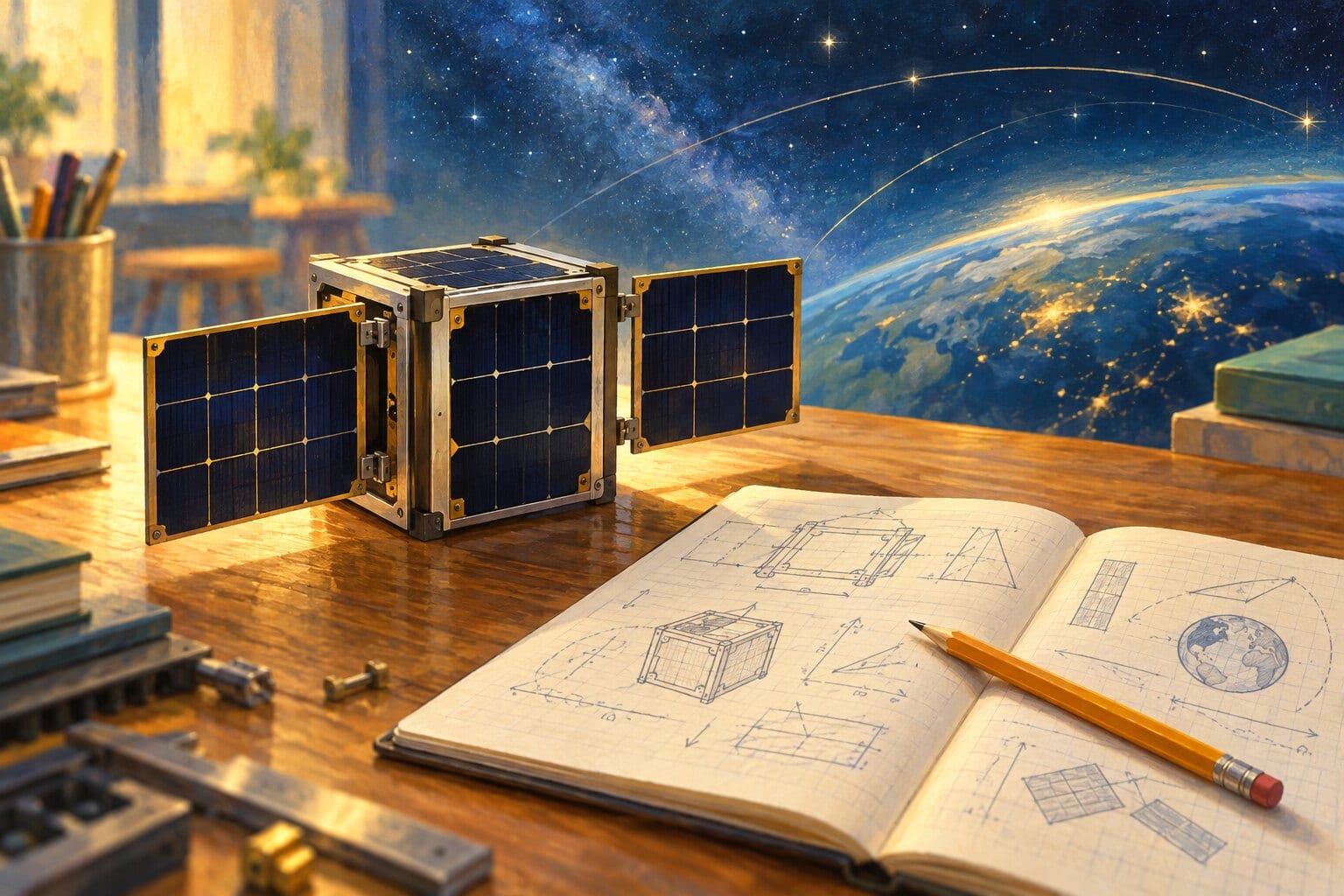
For some Lafayette students, thinking big has meant looking all the way to space.
For others, it begins with a stronger classroom and a better chance to learn.
Nick Pugh III has spent years supporting both, making his selection as the 2026 Lafayette Civic Cup recipient a fitting moment to recognize a hometown hero whose work reaches across generations.
The announcement, reported October 6, honors a Lafayette native whose service combines educational philanthropy, technical expertise, and time spent helping young people turn ideas into working projects.
Giving students room to reach higher
Pugh earned his electrical engineering degree from the University of Southwestern Louisiana, now UL Lafayette, in 1968.
His connection to the university continued well beyond graduation.
The university’s College of Engineering credits him with directing its successful effort to become Louisiana’s first college team to build and launch satellites.
He has also advised students at David Thibodaux STEM Magnet Academy whose biological experiment went to the International Space Station.
Those are remarkable destinations, but the hometown story is about the people learning how to get there.
A student project needs more than a promising idea: it calls for technical judgment, persistence, teamwork, and someone willing to help when a design needs another try.
Mentorship measured in time
UL Lafayette’s reporting on the 2013 CAPE-2 satellite project offers a glimpse of Pugh’s hands-on involvement.
At that time, the university said he spent as much as 20 hours a week with students, offering technical advice and encouragement while also providing financial support.
That historical account should not be read as a statement about his current weekly schedule.
It does show the kind of commitment behind the recognition: expertise shared over time, rather than encouragement offered once and forgotten.
Mentoring helps connect classroom learning with the decisions required to make something work outside a textbook.
For a young engineer, having an experienced person help ask the next question can be as valuable as receiving the answer.
A family commitment to education
The same emphasis on opportunity runs through the Pugh Family Foundation, established by Nick and JoAnn Pugh in 2000.
A July 2026 university profile describes their support for scholarships, the CAPE satellite program, Project Innovate, and the College of Education and Human Development’s Learning Lab.
It also describes a wider commitment to improving public education in Acadiana.
Local reporting on the Civic Cup announcement identifies support for educational initiatives at J.W. Faulk, Dr. Raphael Baranco, and Alice Boucher elementary schools.
The work stretches from early learning to advanced engineering, with education providing the thread that connects it.
An elementary classroom and a satellite laboratory may seem far apart, but both can give students a place to discover what they are capable of doing.
A hometown honor, and an invitation
The Civic Cup celebration is scheduled for Tuesday, November 10, at City Club at River Ranch, according to the announcement.
The reported schedule calls for a reception at 5:30 p.m. and a program at 6:30 p.m., with ticket sales beginning October 12.
Pugh’s response to the honor emphasized the mentors and collaborators who helped him, and encouraged others to become involved.
That is a useful takeaway for the rest of us.
Community service can begin with the knowledge, time, or resources a person already has to share.
In Pugh’s case, years of investment in local learning have helped make ambitious ideas feel closer to home. |
1 Comment
Join the conversation
My nephew was part of the David Thibodaux STEM program a few years back and always talked about how much it meant to have real engineers actually show up and work with them. Nice to see that kind of effort getting recognized.