
Lafayette Facility Earns High Marks for Short-Term Rehabilitation |
Louisiana care rankings highlight local recovery options—and why the type of facility matters |
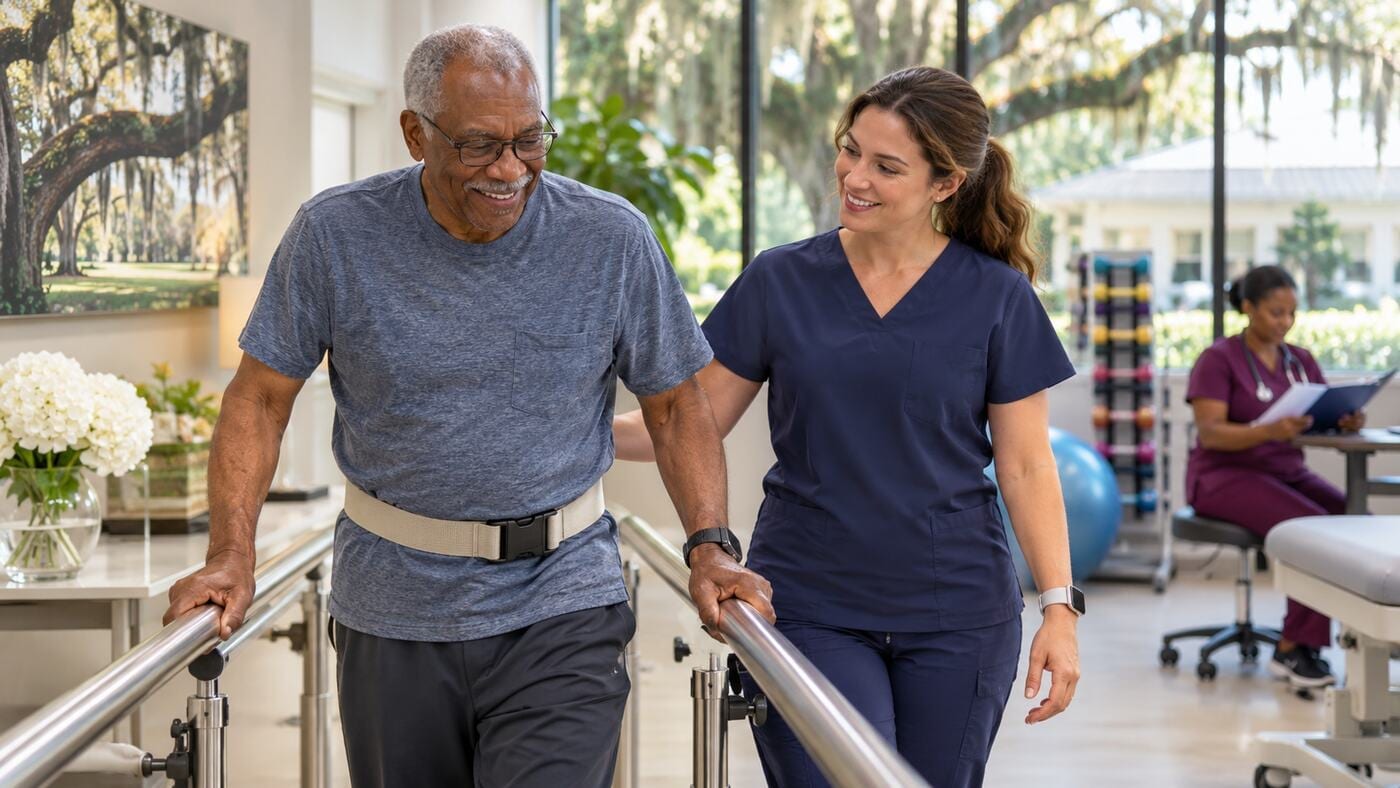
A Lafayette care facility has earned statewide attention for its short-term rehabilitation performance, giving local families another reason to look closely at the care available close to home.
Louisiana Extended Care Hospital of Lafayette was included among seven Louisiana facilities recognized in a recent analysis of rehabilitation and long-term care options.
The Lafayette facility received high marks for short-term rehabilitation, with staffing and patient outcomes among the factors considered in the evaluation.
That recognition matters in a city where many families must make difficult care decisions quickly after a serious illness, surgery, injury or extended hospital stay.
But there is an important distinction families should understand before comparing facilities.
Louisiana Extended Care Hospital of Lafayette describes itself as a long-term acute care hospital, commonly called an LTACH, rather than a traditional nursing home.
It operates within Ochsner Lafayette General Orthopedic Hospital at 2810 Ambassador Caffery Parkway and cares for patients with complex medical needs who require a longer hospital-level stay.
Its own patient information explains that an LTACH is different from both a nursing home and a stand-alone rehabilitation hospital.
That difference can be easy to miss when statewide rankings place several kinds of care under one broad umbrella.
Traditional nursing homes primarily provide residential skilled nursing and daily support, while rehabilitation facilities emphasize therapy after an operation, stroke or injury.
Long-term acute care hospitals serve patients who remain medically fragile and need hospital-level treatment over a longer period, sometimes while also receiving physical, occupational or speech therapy.
The best choice depends less on a headline or star rating and more on matching the patient’s medical needs to the right level of care.
For Lafayette families, the recognition is still encouraging because it highlights local capacity for short-term recovery and complex care.
It also offers a useful reminder that a strong rating should be the beginning of the research process, not the end.
Families should ask how often therapy is provided, who directs the care plan and how progress toward discharge is measured.
Staffing levels can change by shift and weekend, so visitors should ask who will be available overnight and how quickly a nurse or physician can respond when a condition changes.
Inspection history, infection-control practices, fall-prevention plans and readmission rates deserve careful attention as well.
Families should also ask what Medicare or private insurance will cover, which services may require authorization and what costs could remain after coverage ends.
A facility tour can reveal details that ratings cannot capture.
Notice whether patients are engaged, rooms and common areas are clean, call lights are answered promptly and staff members speak respectfully to residents and families.
Ask to meet the people responsible for nursing, therapy, dietary support, medication management and discharge planning.
The Louisiana Department of Health maintains a directory of licensed health facilities, while Medicare’s Care Compare tools let families review nursing homes and long-term care hospitals separately.
Those databases can help confirm a facility’s classification and provide additional performance information before a decision is made.
A patient’s physician, hospital case manager or social worker can help determine which setting fits the person’s diagnosis and recovery goals.
That conversation is especially important when a patient needs respiratory care, wound treatment, dialysis coordination or other services that may not be available in every rehabilitation or nursing facility.
For Lafayette, the latest recognition is positive news, but the larger takeaway is practical: understand the care category, compare the details and ask direct questions.
A high rating is valuable, but the right care match is what gives a patient the best chance to recover safely. |




0 Comments
Join the conversation
Be the first to comment
Share your thoughts above.